
One of the things I realised this last week is that when I go in to my studio, I love the ritual involved in the preparation. If I’m moving from painting to printmaking, I put the handles back on the press and shift it away from the wall to make room for the print bed. The pressure needs to be checked for whatever plate/paper combination I’m going to use, paper cut and dampened and the large square of glass put on the bench ready so I can roll up the ink. Any drawing I’m working from is propped up on the desk where I can see the sketch in the mirror (so the print will be the correct way round). I set out whichever tools I need and then, finally, start to work.
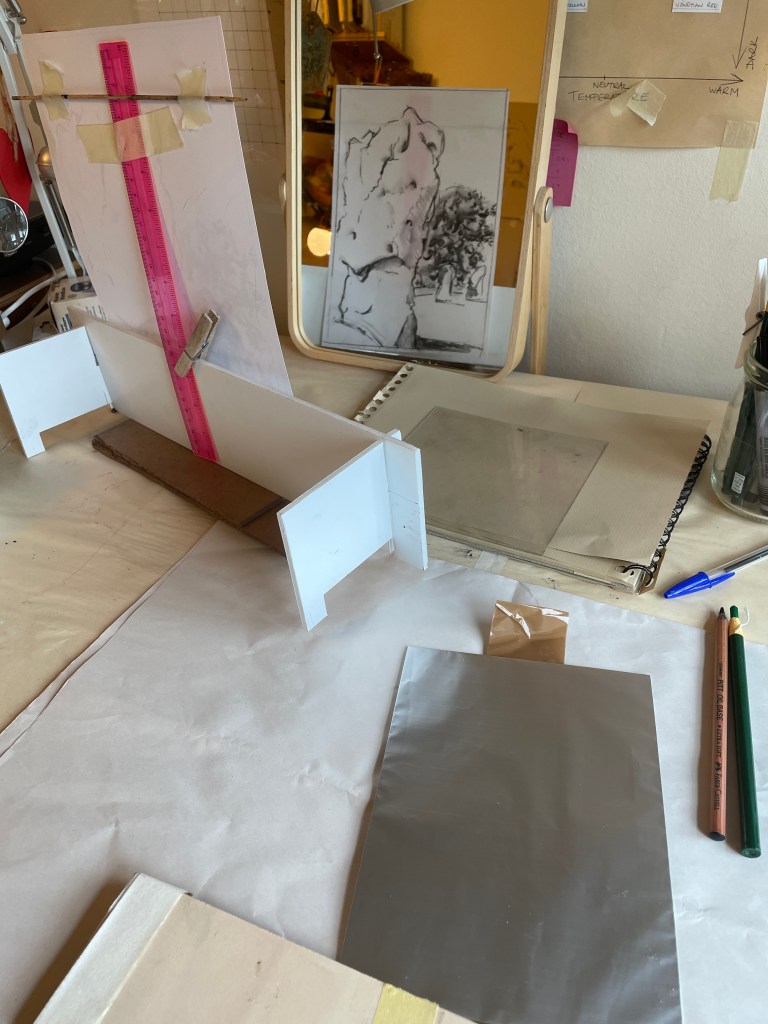
Given I’ve more time at home this summer than originally expected, I decided to have another attempt at kitchen lithography. This is a process invented by Emilie Aizier in 2011; it’s a form of printmaking which reproduces stone lithography conditions but uses fairly standard household items. I’d tried the method a couple of times in the past with limited success, but having seen some wonderful results that others have achieved wanted to give it another go. There are a huge number of tutorials and videos on the process out there – this is the one I watched:
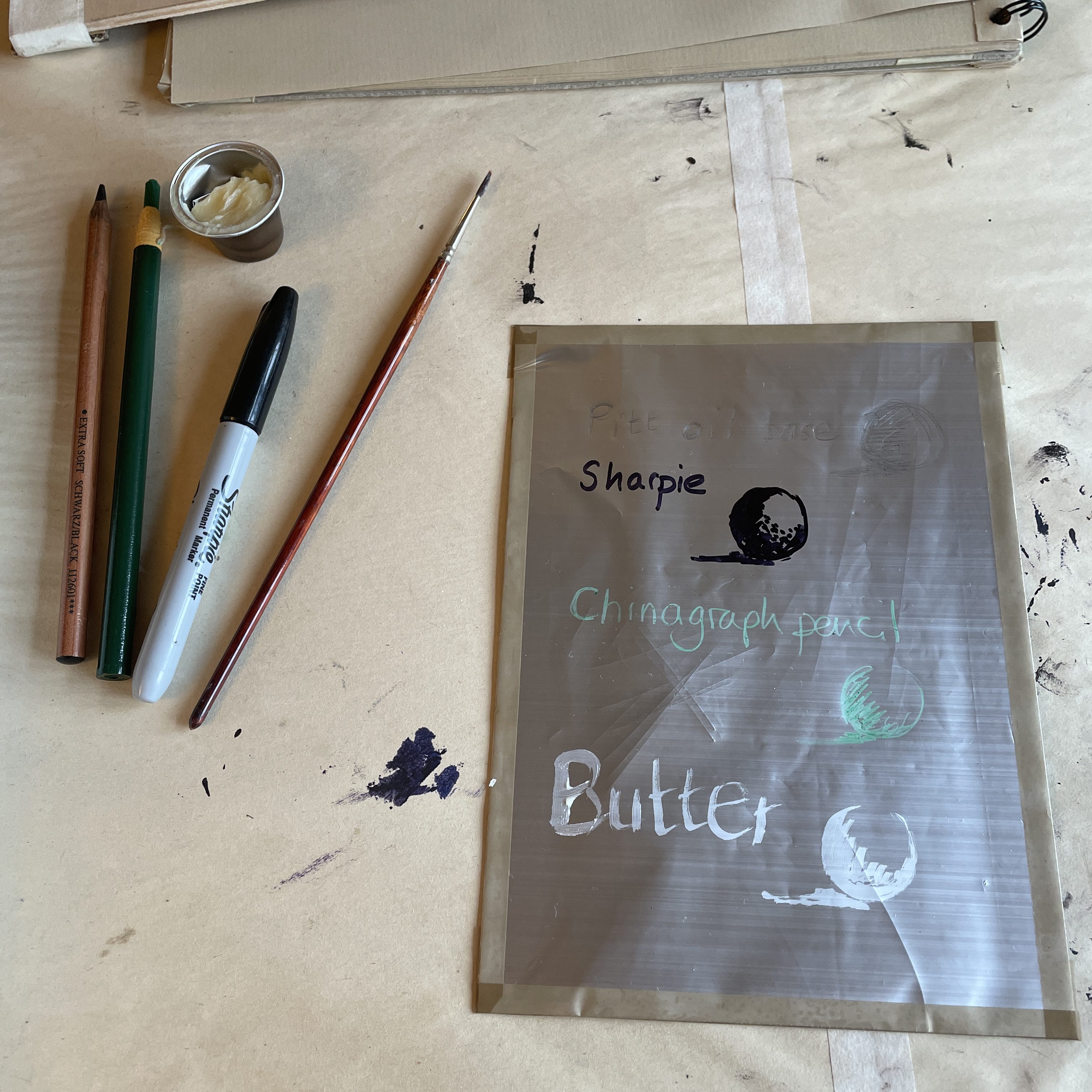
I started by testing out different mark making methods. The plate itself is simply kitchen foil, matt side up, parcel taped to a piece of perspex. Having drawn / painted onto the foil (making sure I got no greasy fingerprints on it, as they would show in the print), I poured coke over it. Next steps were to wash the plate in water, wipe away my marks with some vegetable oil then damp the plate with a wet sponge and finally ink it up and print it. Simples!

The butter painting had not gone well, although I think I’d not really given it enough time in the coke. I also realised I couldn’t have parcel tape around the edge, so made my second plate slightly differently with the parcel tape only on the back face. I decided to try and make a litho drawing of the Avebury stone that I’m working on as a lino cut, given I know the image quite well.
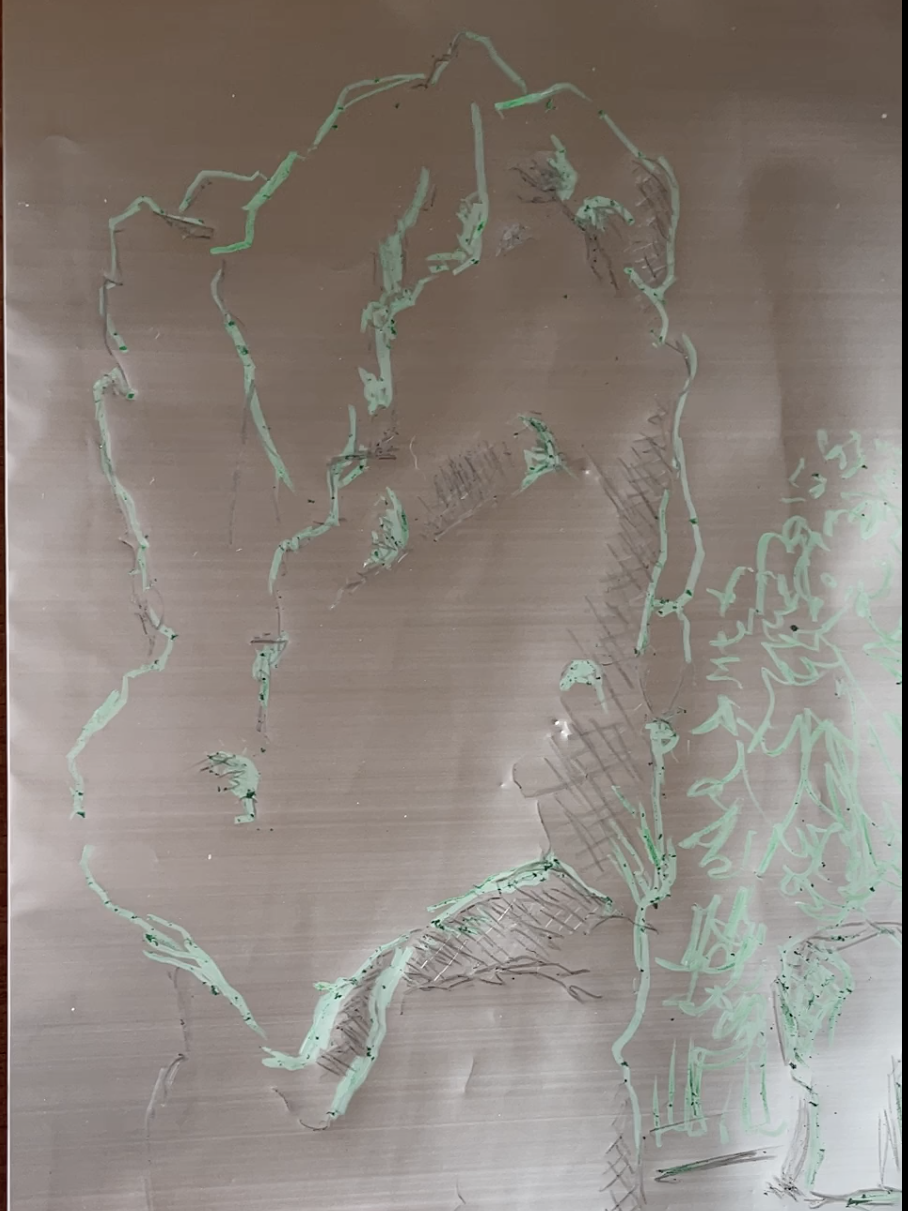
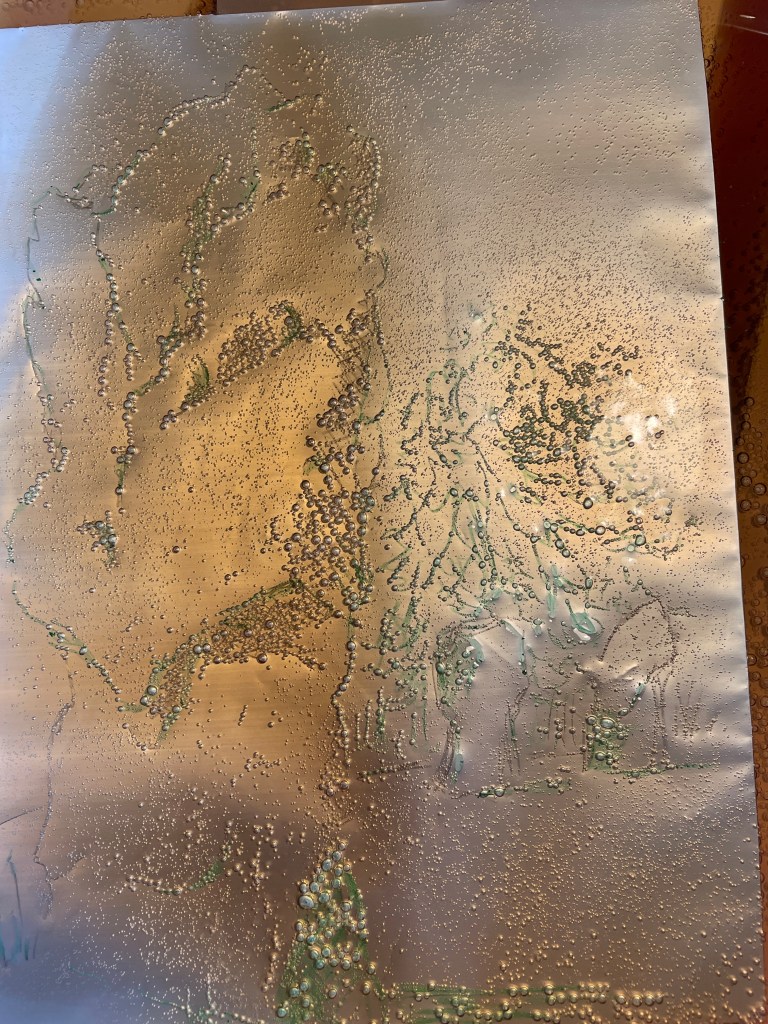
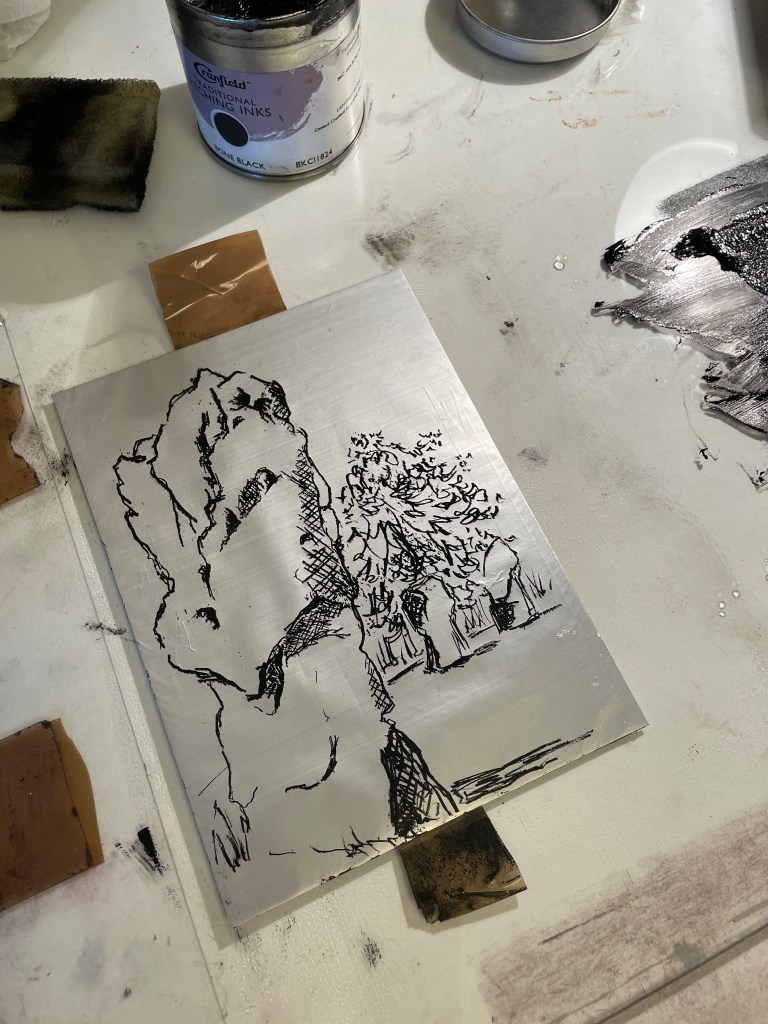
It was fascinating wiping the plate and seeing the ink darken up as it stayed on the drawn areas. I made three prints all told, but the plate was easily capable of producing more:
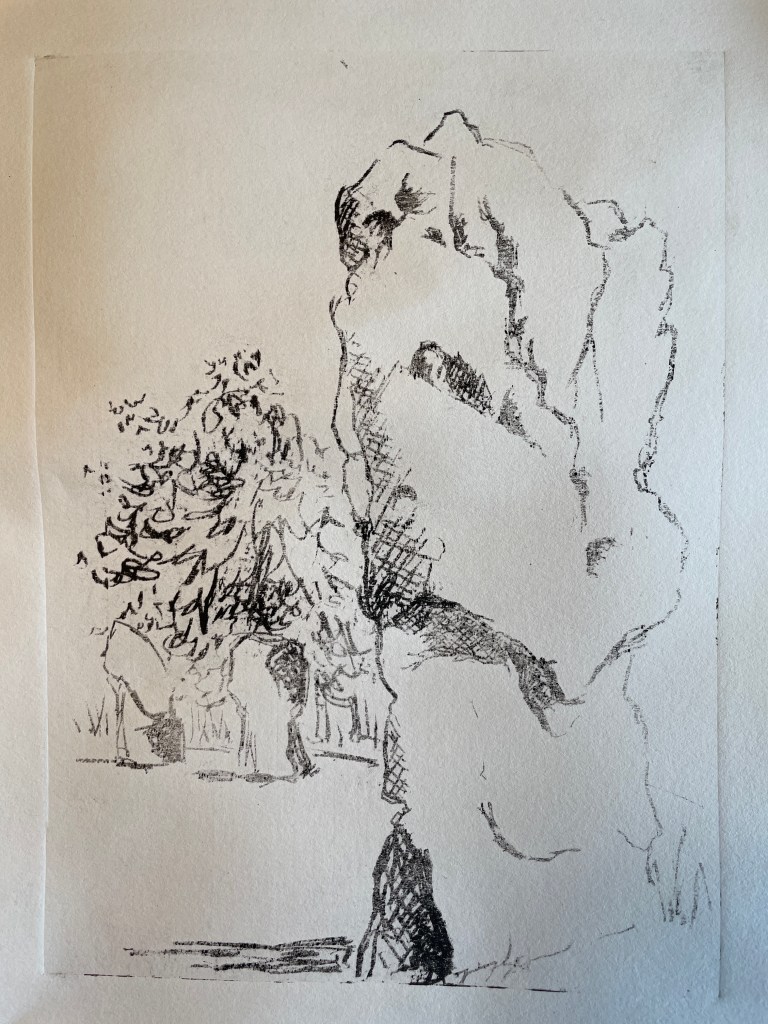
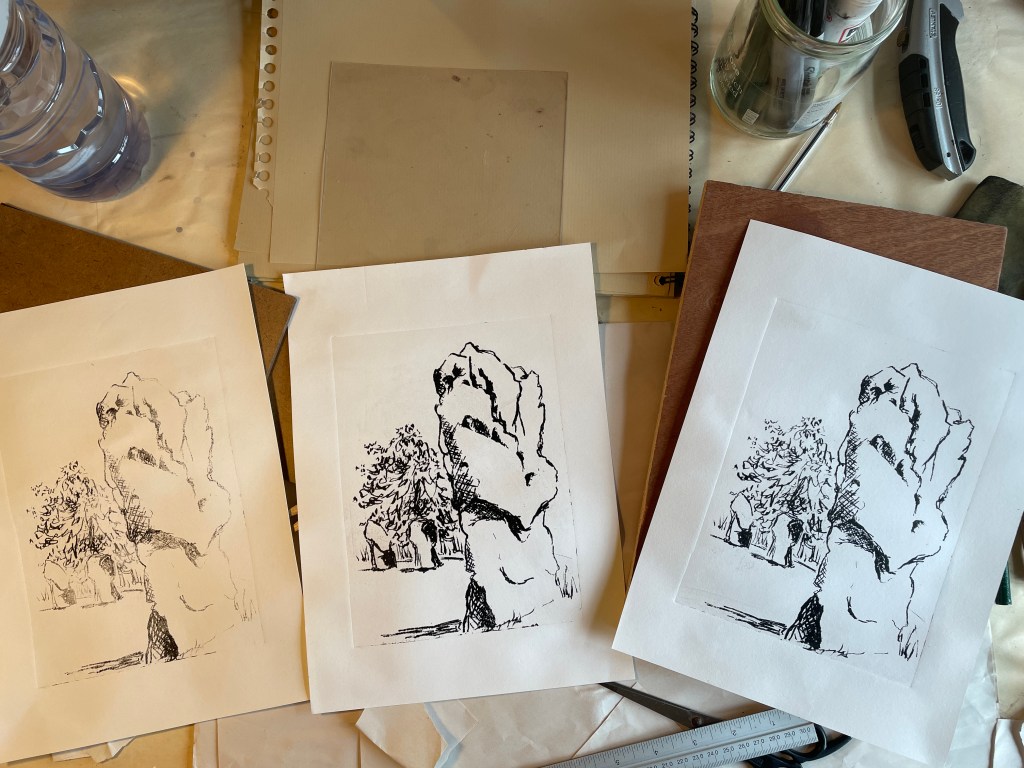
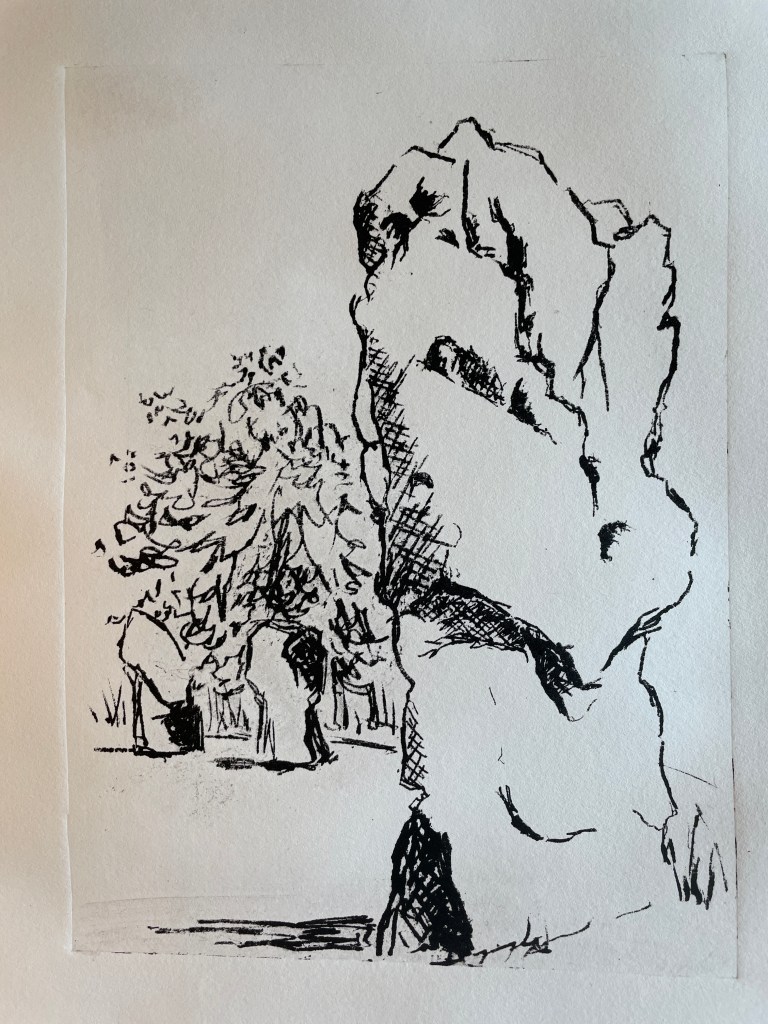
Overall a very satisfying session – I really enjoyed the direct drawing to print method and look of the finished print. I’m thinking maybe lithograph prints alongside lino cuts of different standing stones, or maybe producing a series of lithographs and doing some bookbinding / bookmaking with them. Now there’s an art form with plenty of scope for nice and accurate rituals…
 Kate Chappell